 Skip to content
November 10, 2025
Your Complete Guide to Landing Page Optimization for Design and Conversions

Landing Page Optimisation: Ultimate Guide 2025 for Growth
What is Landing Page Optimization and Why It’s Crucial for Growth
Landing page optimisation is the process of improving web page elements to increase conversions. As a subset of Conversion Rate Optimization (CRO), it’s about strategically enhancing every element to create a more engaging user experience, lower customer acquisition costs (CAC), and drive revenue. For luxury brands, this means creating exclusive experiences that deliver measurable results.
Key elements include:
- Clear, compelling headlines
- Persuasive, benefit-focused copywriting
- Strategic calls-to-action (CTAs)
- Trust signals like testimonials and reviews
- Fast load times and mobile-first design
- A/B testing to validate decisions with data
The numbers are compelling: the average landing page converts at just 5.89%, but an optimised page can achieve a 160% higher conversion rate than other tools. For luxury brands, where each customer holds significant value, even small improvements yield substantial revenue.
Understanding your audience is key. Landing page optimisation uses data, not guesswork, to answer critical questions about user behavior and improve performance. This guide covers the strategic framework, best practices, and common pitfalls of optimising your landing pages for maximum impact.
Optimizing your landing pages enhances user experience and streamlines conversions. With 90% of companies considering CRO crucial to their digital marketing strategy, mastering landing page optimisation is essential for growth.
The Strategic Framework for Landing Page Optimisation
Think of building an effective landing page like designing a luxury storefront. Every element needs to work in harmony, guiding your visitor toward a single, clear action. Let’s break down how to make those seconds count.
Deconstructing the Anatomy of an Effective Landing Page
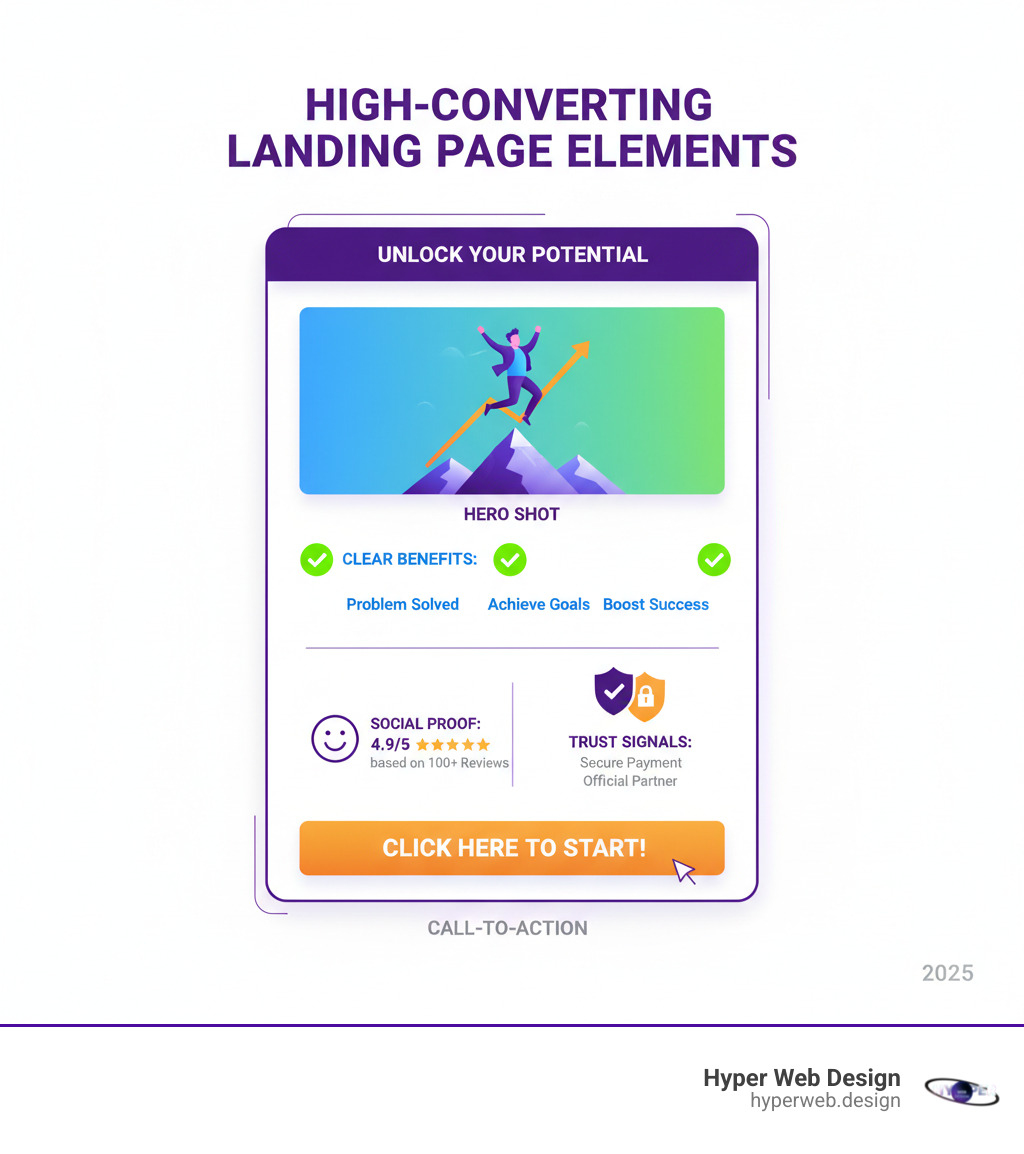
A high-converting landing page is strategic, with each component serving a purpose.
Your headline is everything. Around 80% of visitors read it, but few continue if it doesn’t grab them. It must clearly communicate your value proposition. We’ve seen headlines transform landing page optimisation results by turning a customer’s goal into an empowering statement.
Persuasive copywriting hooks the reader. Write conversationally and focus on benefits, not features. People buy solutions to their problems, so keep your copy clear, concise, and jargon-free.
Clear benefit statements answer the visitor’s question: “What’s in it for me?” Use easy-to-scan bullet points to explain why your product or service matters to them.
The hero shot is your visual centerpiece. This high-quality image or video should convey the essence of your offer. Use authentic images of your product, team, or service in action to build trust. Testing different hero shots often yields significant improvements.
Social proof leverages trust. Real testimonials, customer reviews, case studies, and client logos carry immense weight. A surprising 76.8% of marketers don’t use social proof on their landing pages—a massive missed opportunity to build credibility.
Trust signals include certification badges, security seals, and partner logos. Displaying a phone number and a link to your privacy policy also reassures visitors that you’re a legitimate, professional organization.
For more insights on creating pages that convert, explore our conversion-focused design approach.
Your call-to-action (CTA) turns interest into action. Make it descriptive, straightforward, and visually prominent with contrasting colors or whitespace. “Get your free guide” works far better than a generic “Submit.” On longer pages, repeat the CTA so it’s always accessible.
A Step-by-Step Guide to the Landing Page Optimisation Process
Landing page optimisation is an ongoing cycle of data-backed improvement.
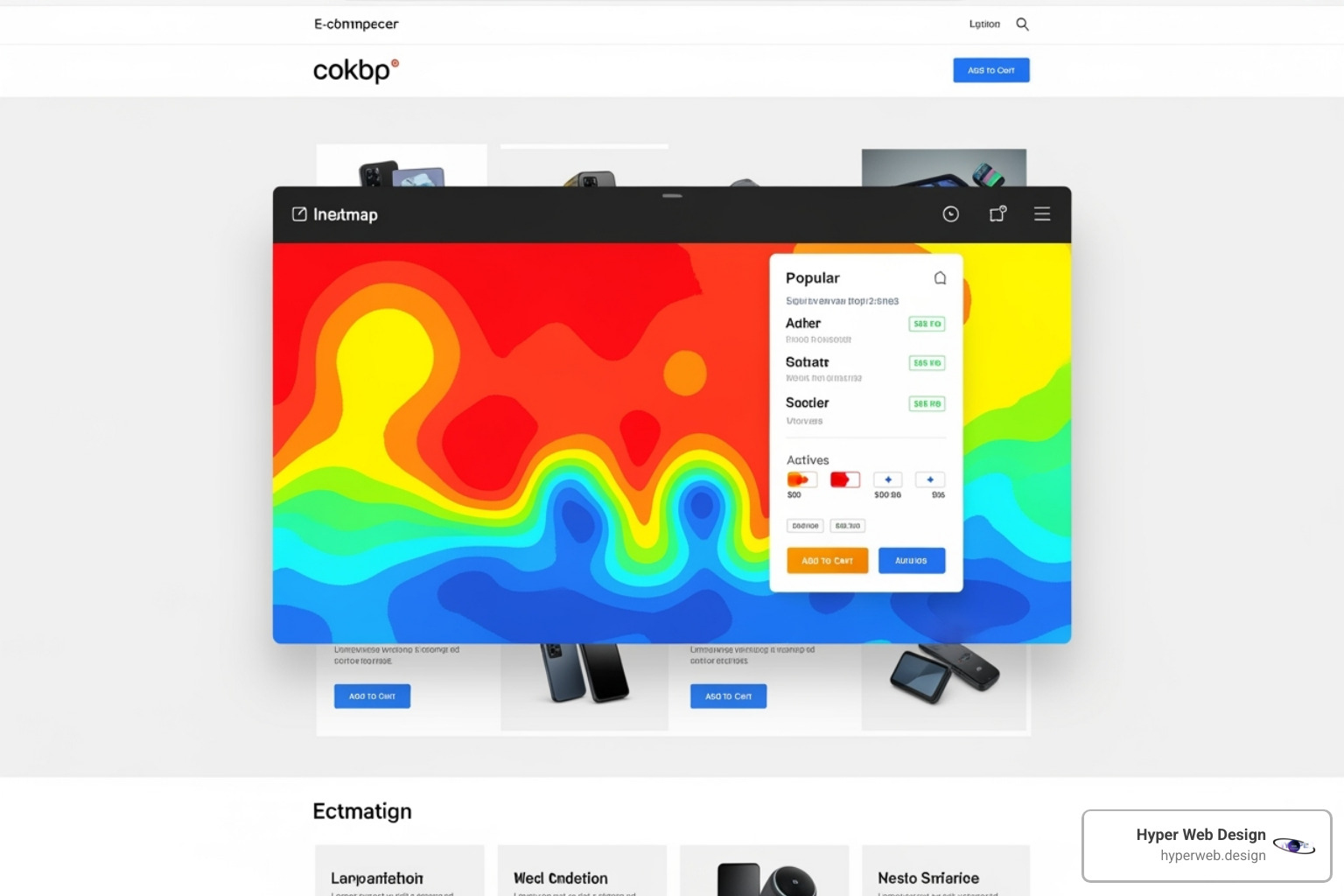
Start with problem identification. Before making changes, understand what’s broken. Use analytics to find pages with high bounce rates, while heatmaps and session replays reveal where users click, scroll, and get confused. Direct feedback from surveys or interviews helps identify pain points. This diagnostic phase ensures targeted changes.
Formulate clear hypotheses. Once you’ve identified a problem, create a testable hypothesis. For example: “Changing the CTA button to red will increase clicks by 10% because it creates stronger contrast.” This structured approach ensures your tests yield actionable insights.
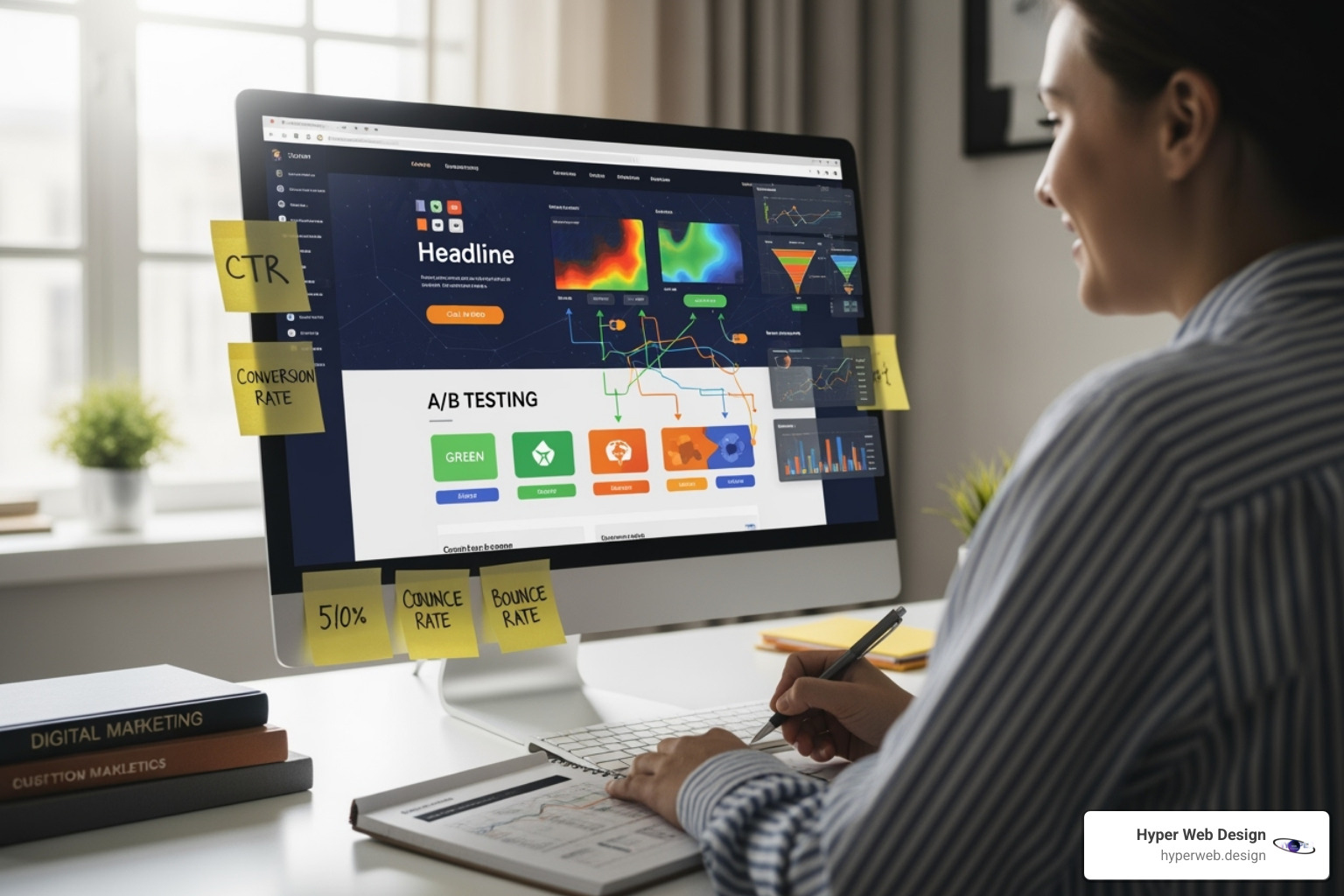
Run A/B tests systematically. A/B testing (or split testing) compares page versions to see which performs better. Focus on one major change per variant, like a new headline or hero shot, and ensure tests reach statistical significance before declaring a winner. Despite its power, 20% of businesses still lack a landing page testing strategy.
Analyze and iterate continuously. After a test, measure the impact on conversions. If your hypothesis was correct, implement the winning variation. If not, learn from the results and create a new hypothesis. This refinement cycle drives long-term success. Common elements to test include headlines, CTA button copy and color, images, form length, and page layout.
Essential Best Practices for Design, UX, and Trust
Certain foundational practices are non-negotiable for effective landing page optimisation.
Mobile-first design is mandatory. With most web traffic coming from mobile devices, your page must scale beautifully across every screen size to provide a good user experience and maximize conversions.
Page load speed matters. Landing pages with 0-2 second load times achieve the highest conversion rates, yet 47% of users expect pages to load in 2 seconds or less. We optimize images, reduce redirects, and use CDNs to ensure fast performance, as over 90% of companies now prioritize page speed.
Test your site speed here to see if slow loading is costing you customers.
Keep navigation simple—or remove it entirely. The golden rule of landing pages is focus. Limiting distractions by removing the main navigation menu can increase conversions by up to 100% by keeping visitors on the intended path.
Build credibility at every turn. Trust is built through consistency and authenticity, not gimmicks. Ensure your branding is consistent from the ad to the page, use verifiable facts, and maintain professional design standards.
Learn more about our approach in our Conversion Optimization Service Guide.
Advanced Strategies: Message Match, Personalisation, and Funnels
Move beyond basics to create seamless, highly relevant experiences.
Message match is absolutely critical. Your landing page must match the ad and keywords that brought visitors there. If an ad promises “20% off luxury watches,” the page must immediately reflect that offer. This contextual relevance manages expectations and drives conversions.
Personalization transforms generic into relevant. Segment your audience to create custom landing page experiences. A returning customer might see a different offer than a first-time visitor, making the experience feel unique and improving engagement.
Align pages with funnel stages. Design pages that cater to different stages of the customer journey. Top-of-funnel (TOFU) pages build awareness with free guides, middle-of-funnel (MOFU) pages help evaluation with webinars or case studies, and bottom-of-funnel (BOFU) pages drive sales with strong CTAs for purchases or trials.
Leverage ad assets strategically. Ad extensions like phone numbers and site links improve ad visibility. Ensure they integrate seamlessly with your landing page to maintain perfect congruence between the ad and the page experience.
For specialized guidance on optimizing for high-value clients, check out our CRO Luxury Brands Complete Guide.
Common Pitfalls and Tools for Success
Even with the best intentions, many teams make avoidable mistakes in landing page optimisation. Knowing what to watch for makes these pitfalls easy to sidestep.
Mistakes to Avoid in Your Optimization Efforts
- Ignoring data: Making decisions based on feelings instead of analytics is a gamble. Every change should be rooted in evidence for genuine growth.
- Testing too many elements at once: If you change the headline, image, and CTA all at once, you won’t know which change was responsible for the results. Test one major element at a time.
- Inconsistent messaging: A mismatch between your ad and landing page (e.g., an ad for boots leading to a page for sandals) destroys trust and wastes ad spend.
- Neglecting mobile users: With most traffic coming from mobile, a poor mobile experience means ignoring the majority of your audience. Google found 70% of mobile landing pages took 7 seconds to load visual content—far too long.
- Overlooking page speed: Slow pages lead to lost conversions. Users have no patience for slow load times, and neither should you.
- Using poor quality stock photos: Generic stock images undermine credibility and make your brand feel artificial. Use authentic photography of your product, team, or brand in action.
- Complicated forms: Every extra form field creates friction and reduces conversions. Only ask for what is absolutely essential for the offer.
- Unclear CTAs: Vague buttons like “Submit” are confusing. Use descriptive, action-oriented text like “Get Your Free Strategy Guide” so visitors know exactly what to do next.
Essential Tools and Next Steps for Your LPO Strategy
Effective landing page optimisation requires the right toolkit to diagnose problems and identify opportunities.
Analytics tools like Google Analytics and Google Search Console are foundational. They provide the quantitative data needed to track conversions, bounce rates, and user flow, helping you spot patterns and problems.
As part of our services, Hyper Web Design provides A/B testing features to systematically experiment with page versions. We test headlines, images, CTAs, and layouts to make data-driven decisions that produce measurable improvements in your conversion rates.
Heatmap and session replay tools provide the “why” behind the numbers. They show where users click, scroll, and get stuck, offering invaluable qualitative insight into user behavior.
Landing page builders are crucial for performance. The market for these tools is projected to reach $6.3 billion by 2032, showing their recognized value. As part of our web design services, we build pages that are not only visually stunning and on-brand but also technically optimized for conversions.
Landing page optimisation is complex, requiring expertise in design, copywriting, analytics, and development. Partnering with professionals is the most effective approach. At Hyper Web Design, we specialize in creating high-end, SEO-optimized websites for elite brands. We don’t just build beautiful pages—we craft secure, conversion-focused digital experiences that drive real business growth.
Ready to stop leaving conversions on the table? Get a quote for your project today and let’s build landing pages that deliver results.
For a deeper dive into our approach, explore our Conversion Optimization Service Guide.