 Skip to content
September 2, 2025
Design Websites Visually Without Coding Nightmares
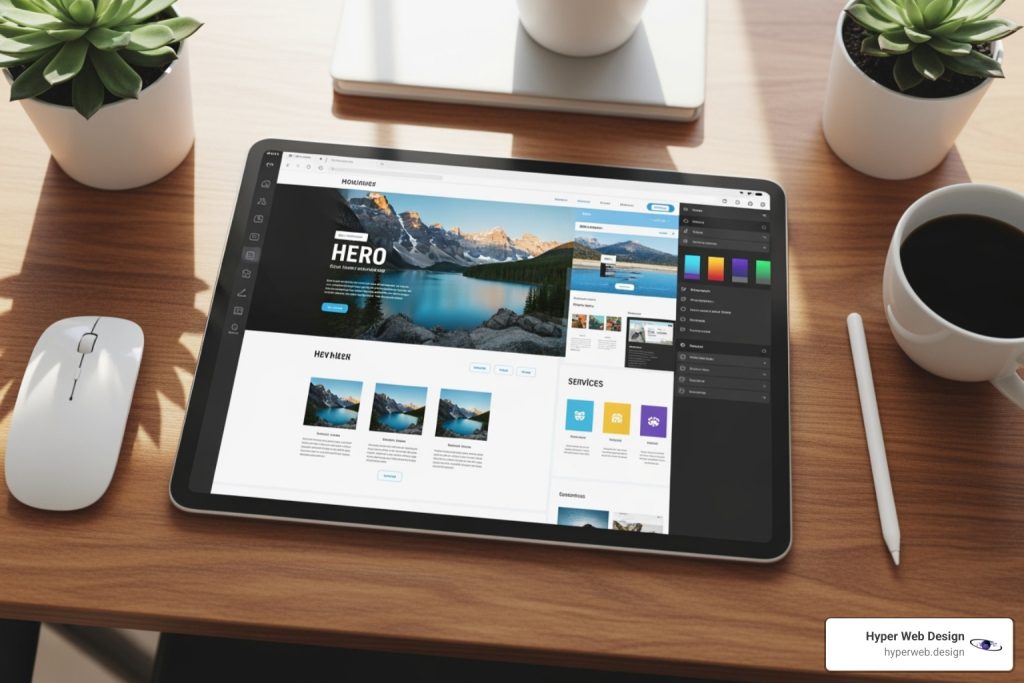
Why Visual Web Design Software is Revolutionizing Website Creation
Visual web design software has transformed how we build websites, letting anyone create professional sites using drag-and-drop interfaces instead of complex code.
What visual web design software offers:
- Drag-and-drop editing – Build layouts by moving elements around visually
- Pre-built templates – Start with professional designs and customize them
- Real-time preview – See changes instantly as you design
- No coding required – Create sophisticated websites without HTML, CSS, or JavaScript knowledge
- Responsive design – Automatically optimize for desktop, tablet, and mobile
- Collaboration tools – Work with teams in real-time with comments and feedback
Unlike basic website builders that focus on simplicity, visual design tools offer more flexibility and the creative control that luxury brands and professional designers need.
As one designer noted: “As a non-coding creative, I get visceral pleasure from honing responsive typography to perfection with the right visual builder.” This captures why these tools are so popular: they empower professionals to build beautiful, functional websites without technical barriers.
The numbers back this up. Research shows that coding is no longer a prerequisite for web design, thanks to visual interfaces and pre-built components. With hundreds of templates available in leading platforms, creators have endless starting points.
I’m Shawn Shameli, and with over a decade of experience, I’ve seen how the right visual design tool can transform how quickly and effectively teams bring their digital ideas to life, balancing creative vision with technical performance.
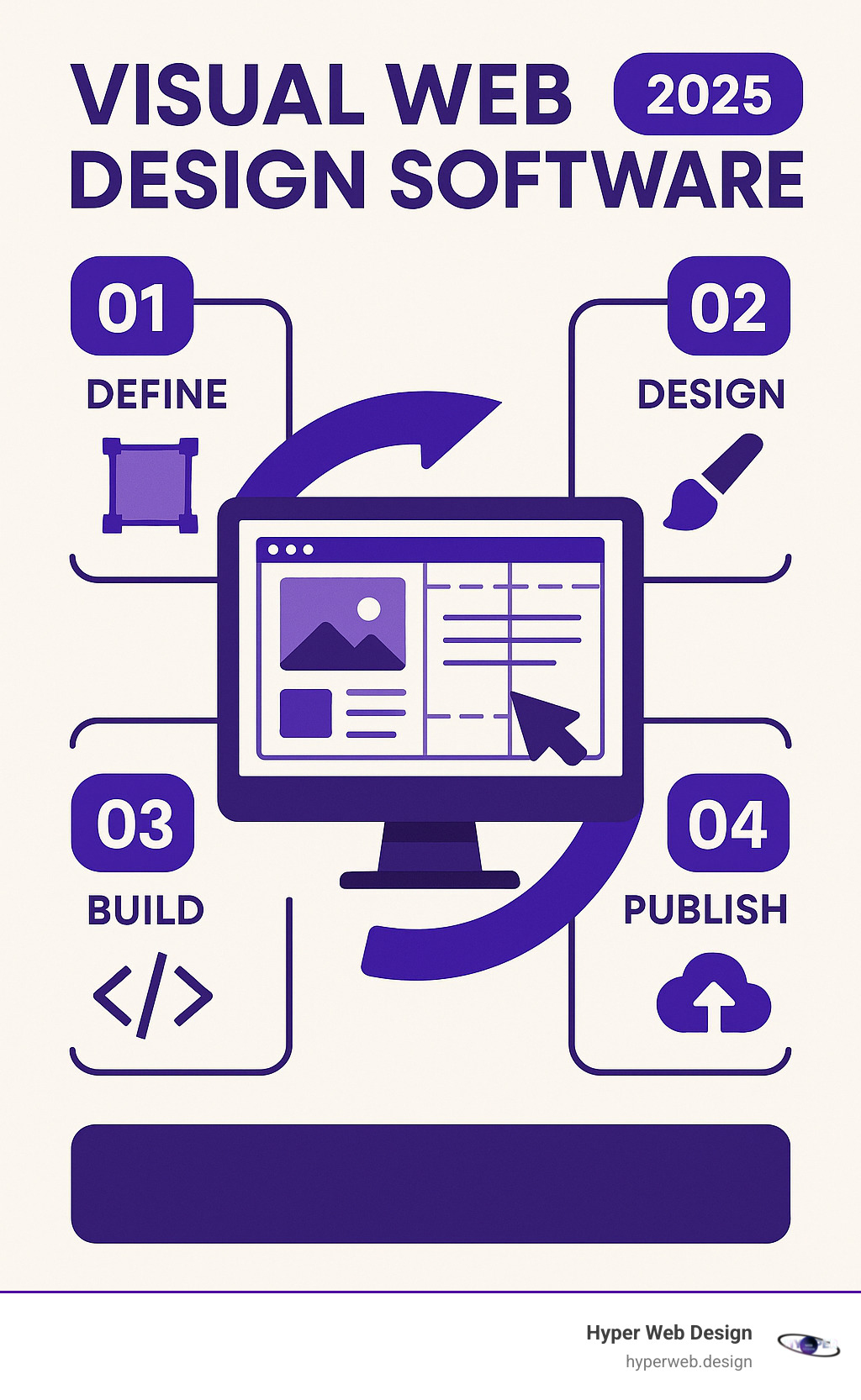
Core Features to Demand from Your Design Software
When choosing visual web design software, we need power, flexibility, and features that streamline the design process. The best tools blend intuitive visual controls with robust capabilities.
A drag-and-drop interface is at the heart of this, enabling speed and rapid iteration. This visual freedom allows for experimentation, ensuring the final design matches your vision. A rich library of templates is also essential. Many leading platforms offer thousands of professional foundations, saving countless hours and letting us focus on customization rather than building from scratch.
In today’s multi-device world, responsive design is a necessity. Modern software excels here, ensuring websites look flawless on any screen size with minimal manual tweaking. Design also requires strong collaboration tools. Features that allow teams to work on a project in real-time, leave comments, and share feedback are non-negotiable.
Prototyping capabilities are crucial for testing ideas early. Visual software lets us create interactive mock-ups to simulate the user experience and gather feedback, enabling quick and effective iteration. While visual tools minimize coding, custom code support is invaluable for ultimate control, empowering us to push design boundaries.
Finally, a website needs to be found, making integrated SEO tools and seamless integrations critical. Many visual builders help optimize content for search engines and connect with other essential tools, making the entire workflow more efficient. According to research from the Nielsen Norman Group, effective visual design significantly impacts user experience and website success.
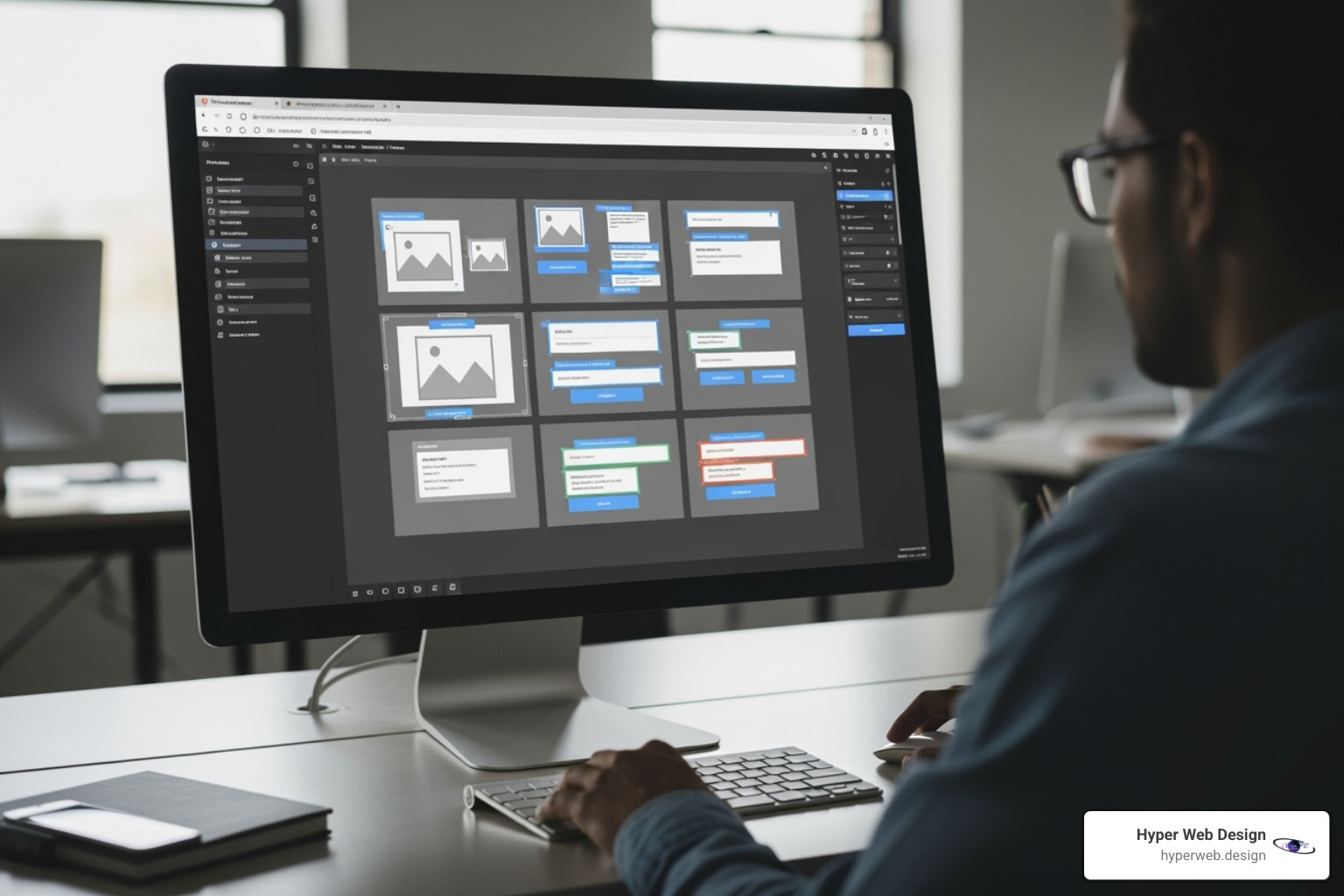
What to Expect from Visual Web Design Software
Digging deeper, we find a common set of powerful functionalities. An intuitive UI is paramount, allowing us to focus on creativity. Pre-built components like navigation bars and contact forms can be dragged and dropped into a design, speeding up the process and ensuring quality.
Extensive asset libraries are also a huge benefit, offering thousands of free templates, photos, and graphics directly within the software. Real-time editing provides an instant feedback loop, which is crucial for refining layouts with pixel-perfect precision.
For brand consistency, design systems are vital. These collections of reusable components and guidelines ensure a cohesive look across all digital properties. Lastly, effective version control allows us to track changes and revert to previous versions, which is a lifesaver when collaborating.
Here’s a list of essential integrations that improve visual web design workflows:
- Graphic design software
- Stock photo and video libraries
- Font libraries
- Analytics platforms
- CRM (Customer Relationship Management) systems
- E-commerce platforms
- Online form builders
- CDNs (Content Delivery Networks)
Collaboration and Handoff for Teams
Web design is rarely a solo endeavor, so effective teamwork is key. We look for tools with seamless multiplayer editing, allowing designers and developers to work on the same file simultaneously. This is complemented by real-time commenting, which enables precise, contextual feedback directly on design elements.
One of the most critical aspects is the design-to-development handoff. The best visual software bridges this gap by generating clean, exportable code and providing developers with all necessary specs and assets. Dedicated handoff features ensure a smooth transition from design to a functional website.
Shared component libraries are another game-changer, housing reusable design elements that maintain consistency. When a component is updated in the library, it updates everywhere it’s used, saving time and preventing brand inconsistencies. For larger teams, role-based permissions and streamlined workflows ensure project integrity and efficient progress from ideation to launch.
At Hyper Web Design, our process is built on these principles, ensuring our teams work seamlessly to deliver high-end, conversion-focused digital experiences.
How Hyper Web Design Empowers Visual Web Design

At Hyper Web Design, we leverage the power of visual web design software to serve a diverse range of clients, from startups to established enterprises. Our approach combines intuitive visual tools with the precision and scalability required for elite brands, delivering secure, conversion-focused, and visually stunning websites.
For Beginners and Quick Projects
For those new to web development or needing a fast launch, we prioritize ease of use without sacrificing quality. Our process uses an intuitive drag-and-drop editor for rapid prototyping, making the initial design stages accessible and exciting. We start with an extensive template library and apply easy customization to transform a design to perfectly match your brand’s unique aesthetic. This guided approach, combined with our expert oversight, ensures even quick projects result in high-quality, professional websites.
For Professional Designers and Teams
For professional designers and larger teams, we use the advanced capabilities of visual web design software. We support advanced design systems to ensure brand consistency across all digital touchpoints, which is crucial for maintaining a luxury brand identity. Our workflow integrates real-time collaboration and sophisticated prototyping and feedback tools, allowing teams to work concurrently and iterate to perfection. With shared asset libraries, all team members have access to the latest brand assets, fostering consistency and ensuring complex projects are executed flawlessly.
For Developers and Coders
We recognize that excellence often requires fine-tuning. For developers, our approach offers the best of both worlds. We ensure our visual designs translate into clean, optimized code with robust custom code support. Developers can access and modify the underlying HTML, CSS, and JavaScript for specific functionalities or performance optimizations. We use tools with live preview editing and maintain careful version control, accelerating the development cycle. Our solutions are designed for seamless integration with developer tools, ensuring the final product is technically sound and scalable.
Visual Builders vs. Coding: A Head-to-Head Comparison
Choosing between visual web design software and traditional coding is a major decision. Both paths lead to great websites, but they take different routes. Let’s compare what each approach offers.
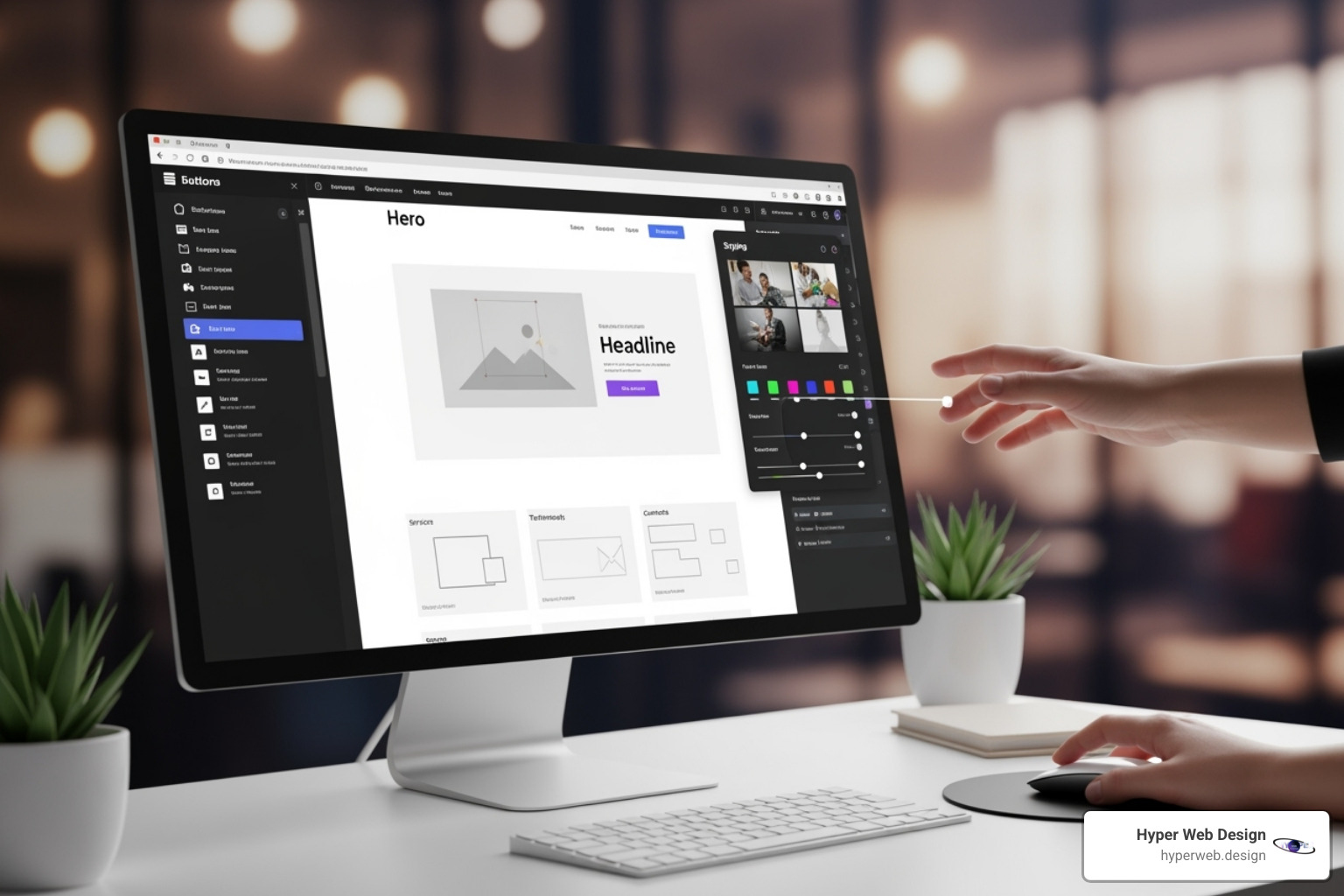
The most obvious difference is speed versus flexibility. Visual builders are incredibly fast. With drag-and-drop interfaces and templates, you can launch a professional-looking site in hours. The trade-off is that this speed comes with some boundaries. While customization is impressive, you might not be able to build a truly unique, complex feature. Coding from scratch offers ultimate creative freedom, but this level of control requires significant time and expertise.
Cost implications are also different. Visual design software often has a lower upfront cost, with free trials and monthly subscriptions typically ranging from $10 to $50. Custom coding can have a higher initial cost, especially when hiring developers. However, once a coded site is built, you own it completely with no recurring platform fees, which can save money long-term.
Maintenance and updates are another key differentiator. With visual builders, the platform handles technical maintenance like security patches and bug fixes. If you code from scratch, you or your developer are responsible for all ongoing maintenance, which requires technical vigilance.
The learning curve is perhaps the biggest factor. Visual web design software is designed for non-coders, opening up web creation to artists and entrepreneurs. Traditional coding requires mastering multiple programming languages like HTML, CSS, and JavaScript.
Scalability depends on your long-term vision. For most standard websites, visual builders scale well. However, for custom web applications with specialized features, coding from scratch often provides superior scalability and performance.
At Hyper Web Design, we find the most powerful approach often combines both worlds. We leverage the speed of visual tools while incorporating custom web design elements where they add the most value. This hybrid method delivers bespoke digital experiences that are both visually stunning and technically sophisticated.
| Feature/Factor | Visual Web Design Software | Coding From Scratch |
|---|---|---|
| Speed | Very fast; rapid prototyping and deployment | Slow; requires significant time for development |
| Control | Good, but with potential limitations; often template-driven | Ultimate control; every detail customizable |
| Cost | Lower initial cost; recurring subscriptions | Higher initial cost (for talent); lower long-term if managed well |
| Skill Req. | Low to none (for basic use); visual intuition | High; requires expertise in multiple programming languages |
| Flexibility | Good for standard sites; can be limiting for unique features | Unlimited; can build anything imaginable |
| Maintenance | Handled by platform provider (updates, security) | Requires ongoing technical knowledge and time |
| Learning Curve | Gentle; intuitive drag-and-drop | Steep; requires dedicated study and practice |
| Performance | Can vary; sometimes generates bloated code; depends on platform | Potentially highly optimized; clean, efficient code |
| Scalability | Good for most websites; can be limited for complex apps | Excellent for complex applications and unique functionalities |
| Uniqueness | Can look similar to other sites using the same templates | Creates truly unique, bespoke designs |
Frequently Asked Questions
I get these questions all the time from clients curious about visual web design software. Let me share the answers that matter most.
Do I Need Coding Knowledge to Use Visual Web Design Software?
Absolutely not! This is the most common question, and the answer is why these tools are so popular. Modern visual web design software is designed for people who have never written a line of code. The drag-and-drop functionality is intuitive, letting you move elements like text boxes and images around the page.
Pre-built components handle the technical work behind the scenes. You can customize professionally coded templates without touching any code. That said, many advanced tools offer optional code access for unique customizations, but it’s not required. Most platforms also include helpful learning resources to get you started, so you can create a professional site on day one.
For more inspiration on what’s possible with these tools, check out our guide to Modern Website Design Trends.
How Does Visual Web Design Software Boost SEO and Performance?
It’s a common misconception that visual builders create slow or search-unfriendly websites. Quality platforms do the opposite. They generate clean code that search engines can easily read and understand, following best practices for HTML and CSS. Most come with built-in SEO tools to easily edit meta titles, add alt text, and create sitemaps.
Mobile responsiveness is typically automatic, which is crucial for Google’s mobile-first indexing. Your site will adapt to all devices without extra work. Fast loading times are another advantage, as quality platforms use optimized hosting, CDNs, and automatic image optimization. This focus on user experience naturally improves SEO by keeping visitors engaged longer.
How Do Pricing and Free Trials Work?
Pricing for visual web design software is usually straightforward. Subscription models are most common, with discounts for annual billing. Plans are often tiered, with premium tiers offering advanced features like collaboration tools and more integrations.
Free plans and free trials are great for testing a platform before committing. You can often build and preview a site to ensure the interface and features meet your needs. Some platforms use per-user pricing for team features, which is important to consider for agencies. One-time purchases are less common but can offer great long-term value by avoiding recurring fees.
For budget-conscious users, we’ve put together a comprehensive guide to Free Visual Web Design Software that covers the best no-cost options available.
The key is to match the pricing model to your specific needs and usage patterns.
Conclusion: Building Your Vision into a Digital Reality
After exploring visual web design software, it’s clear we’re in an exciting era for web creation. These tools have made professional website design accessible to everyone, from entrepreneurs to creative teams.
We’ve seen how drag-and-drop interfaces, template libraries, and collaboration tools have removed traditional barriers. You no longer need coding experience to bring a digital vision to life. Built-in SEO capabilities and responsive design ensure your site not only looks amazing but also performs brilliantly.
This shift is empowering creativity like never before, allowing ideas to flow directly to the screen. While hand-coding offers ultimate control for specific cases, visual tools provide a practical and efficient path for most web projects.
Choosing the right tool comes down to your needs. Whether you prioritize speed, collaboration, or custom code flexibility, there’s a visual design solution that fits. The future of web design is bright, with innovations in AI and smoother workflows making it easier for more people to create the digital experiences that shape our world.
For businesses seeking a high-end website that transcends template limitations, partnering with an agency like Hyper Web Design ensures a bespoke digital experience. We blend the efficiency of visual web design software with luxury design principles and advanced technology. Our expertise allows us to craft secure, visually stunning, and conversion-focused websites that drive real business growth.
Ready to transform your online presence? Explore our Web Design Services to see how we can build your vision into a digital reality that truly represents your brand’s excellence.