 Skip to content
October 8, 2025
Mobile Magic: 6 Exceptional Designs to Inspire Your Next Project
Why Mobile-First is the Only Way Forward in 2025
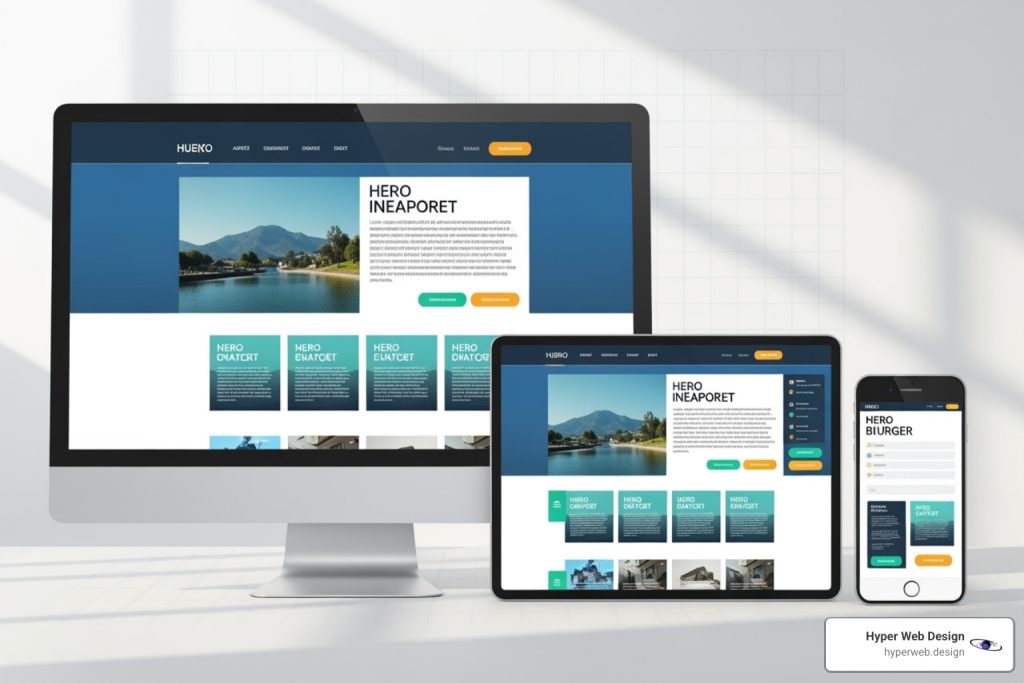
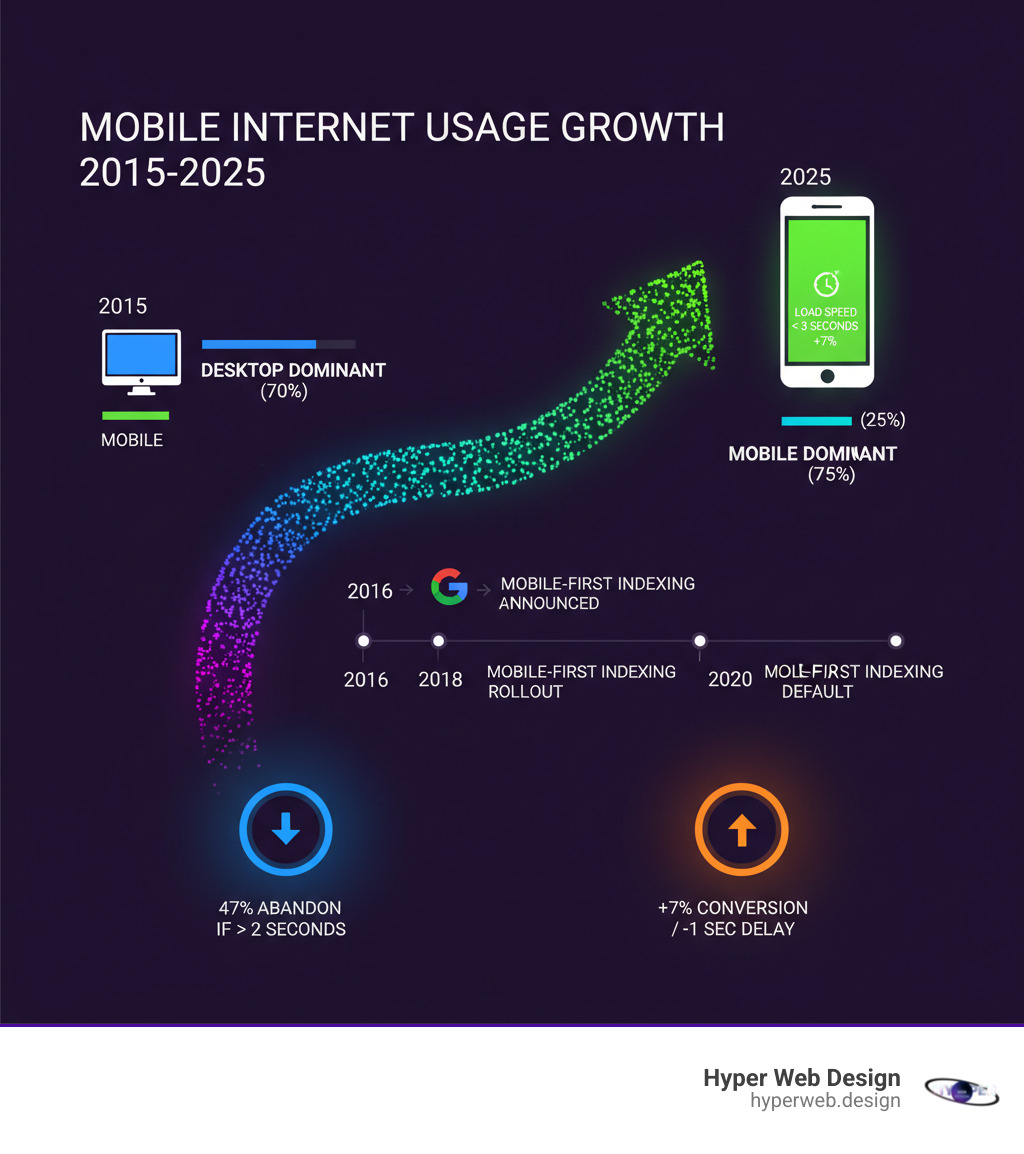
In 2025, mobile friendly web design is the foundation of a successful online presence. With mobile web visits far outpacing desktop and Google’s mobile-first indexing now standard, your mobile site is your primary site for SEO. A poor mobile experience drives away customers6% of visitors abandon a site that takes over 2 seconds to load. For luxury brands, the challenge is delivering a premium feel with the speed mobile users demand. At Hyper Web Design, we specialize in crafting premium, mobile-first experiences that blend elegance with performance to drive conversions.
Essential elements include a responsive layout, fast loading speeds (under 3 seconds), touch-friendly buttons (44×44 pixels minimum), readable text (16px minimum), and simplified navigation.
Basic mobile friendly web design vocab:
Building the Foundation: Responsive Layouts and the Viewport
Responsive web design allows a site to automatically adapt its layout to fit any screen. It’s a critical SEO factor that improves user experience and boosts conversions.
The Viewport Meta Tag: This code tells the browser how to control the page’s dimensions and scaling.
<meta name="viewport" content="width=device-width, initial-scale=1.0"> Responsive Images: To prevent slow load times, use max-width: 100%; in CSS to make images scale fluidly. For more control, the HTML <picture> element can serve different image sizes based on the user’s screen.
Media Queries: These CSS rules apply different styles based on screen width, allowing a desktop layout to become a single column on mobile.
/* Mobile-first styles */ .container { display: block; } /* Styles for screens wider than 600px */ @media screen and (min-width: 600px) { .container { display: flex; } } CSS Frameworks: Frameworks like Bootstrap provide pre-built, responsive components that speed up development. While we often build Custom Web Design solutions, they can provide a robust foundation.
More info about Responsive Website Design

Enhancing Usability: Speed, Navigation, and Touch-Friendly Elements
A beautiful site is useless if it’s slow or hard to use. We ensure both beauty and usability.
Website Speed: A cornerstone of mobile UX, speed is improved by optimizing images, lazy loading content, minifying code, using a CDN, and caching.
Simplified Navigation: Mobile navigation must be intuitive. Use a hamburger menu, keep labels concise, feature a prominent search bar, and ensure the logo links home.
Touch-Friendly Design: Designing for fingers requires larger targets. Based on findings from the MIT Touch Lab, we ensure touch targets are at least 44×44 pixels with enough space to prevent accidental taps.
Device Orientation: A site must adapt gracefully when a phone is rotated. Fluid layouts ensure content reflows naturally in both portrait and landscape modes.
Learn about Mobile Optimized Web Design
Driving Conversions: Optimizing Content, CTAs, and Pop-ups
A fast site still needs optimized content and calls-to-action (CTAs) to convert. Our Conversion Rate Optimization Services Company expertise ensures this.
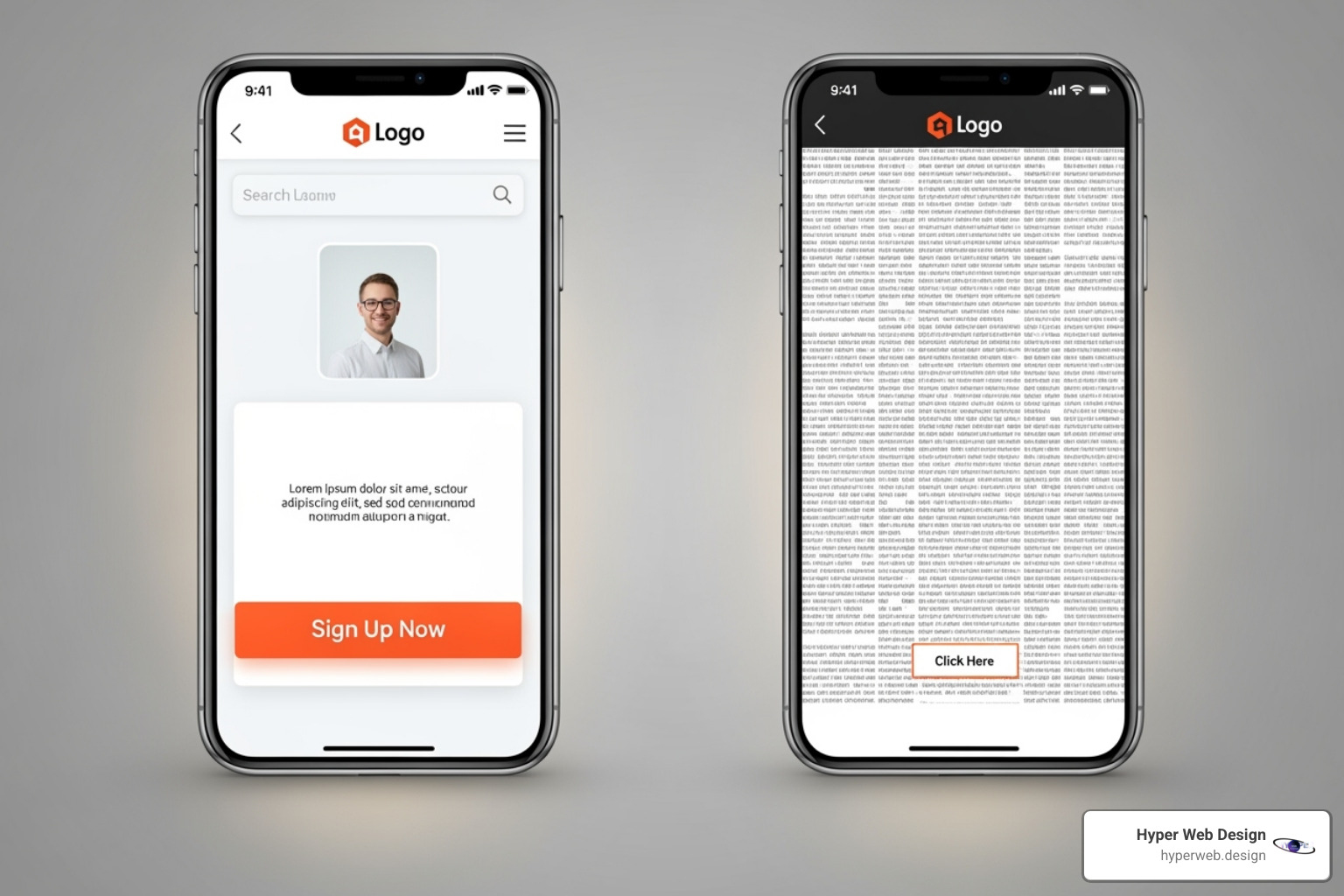
Mobile Readability: Ensure text is easy to read with responsive font sizes, clean sans-serif fonts, short paragraphs, and high-contrast colors.
Mobile CTAs: CTAs must be prominent and easy to tap. Make them large (at least 48×48 pixels), use high-contrast colors, and place them for easy thumb access.
Mobile Pop-ups: Pop-ups must not be intrusive. Trigger them based on user engagement, not on page load. Always provide a large, clear close button.
Key Elements of a Mobile-Friendly Website:
A great mobile experience includes a responsive layout, speed optimization, intuitive navigation, touch-friendly elements, readable content, optimized media, clear CTAs, accessibility, vertical design, and consistent branding.
The Core Elements of Exceptional Mobile Friendly Web Design
The best way to understand great mobile friendly web design is to see it in action. These six websites nail the mobile experience:
- Cowboy: Masterclass in mobile e-commerce with incredible speed and clean, bold CTAs.
- Shutterfly: Proves image-heavy sites can be beautiful and functional on mobile.
- Typeform: A minimalist approach for lightning-fast load times and a focused user journey.
- Etsy: Places search and categories front and center for immediate user access.
- Pipsnacks: Shows mobile-friendly can be fun and engaging without sacrificing performance.
- Adrian Zumbrunnen: Showcases innovation with an animated scroll, minimal design, and incredible speed.
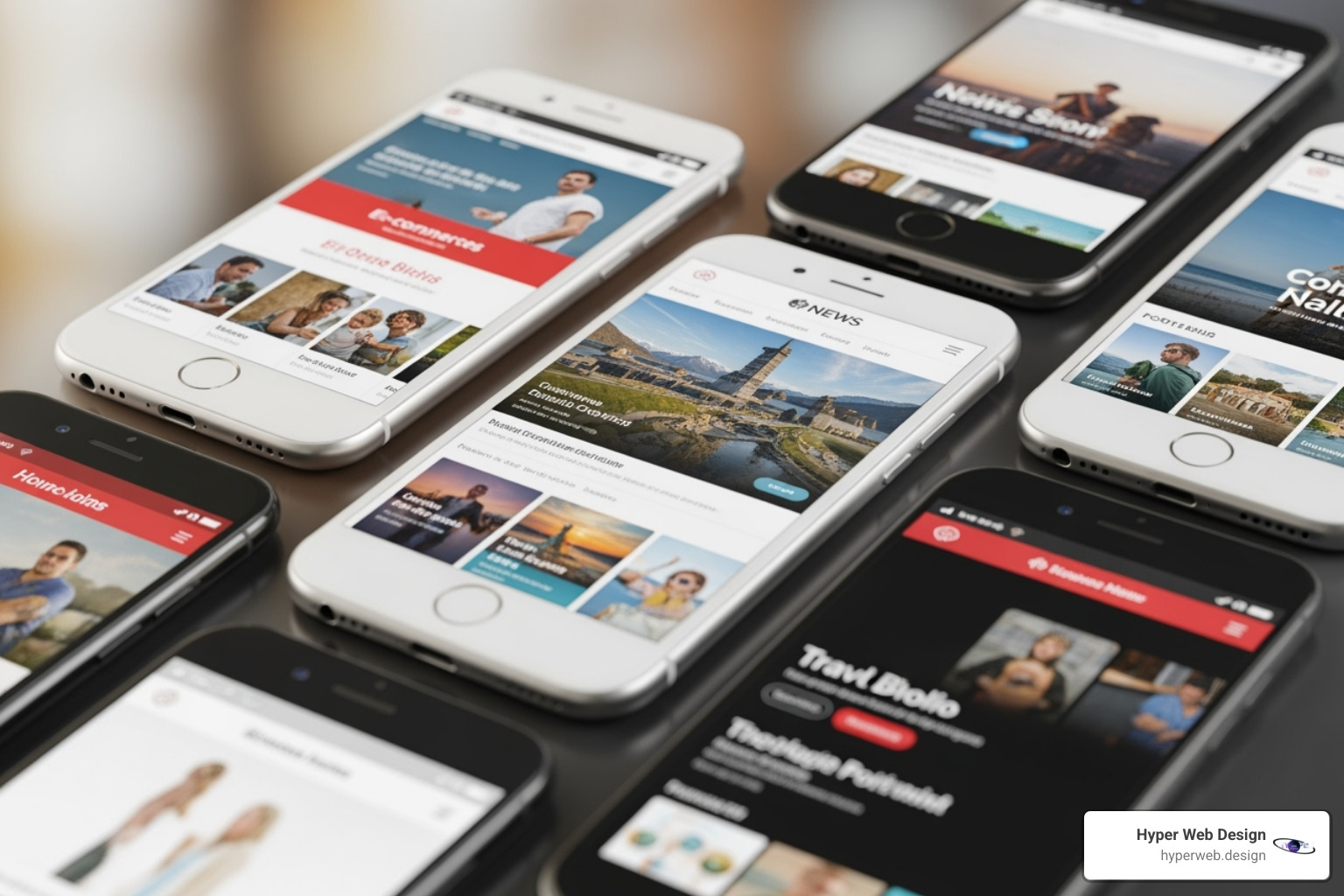
These sites succeed because they prioritize what mobile users need: instant loading, simplified navigation, and prominent CTAs. They were designed for a mobile context, not just a smaller screen.
Key Takeaways for Your Own Mobile-Friendly Site
Successful mobile UX follows a few key principles:
- Accept Vertical Design: Users scroll vertically. Design for this natural flow and avoid horizontal carousels.
- Simplify Menus: Limit your mobile menu to 5-7 essential pages.
- Design for Thumbs: Make buttons large and place key actions where thumbs can easily reach them.
- Create Visual Hierarchy: Use size, color, and contrast to guide users to important elements.
- Avoid Conversion Killers: Slow load times, tiny buttons, and intrusive pop-ups lose business.
- Focus on Business Goals: Every design choice should support the user’s journey to becoming a customer.
Explore Modern Website Design Trends to see what’s working.
Testing and Launching Your Mobile Site
Thorough testing is what separates a site that works from one that converts.
- Google’s Mobile-Friendly Test: Use this free tool from Google as your first step. Passing is non-negotiable for SEO.
- Browser Simulators: Use browser developer tools to quickly check how your site responds to different screen sizes.
- Real Device Testing: There is no substitute for using your site on actual phones to understand the true user experience.
- Performance Testing: Use Google PageSpeed Insights to analyze loading speed and get recommendations for improvement.
At Hyper Web Design, we put every site through rigorous testing to ensure the luxury brands we work with deliver flawless experiences on every device.